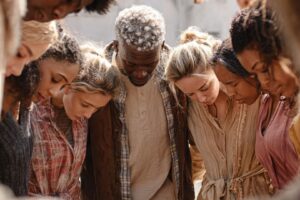
Great turn out to our Bible Lecture Campaign in Ottawa from May 11 to 12, 2012


Mr. Bill Watson message was entitled “A Prophetic Warning From The Voice of Ezekiel”.  Ezekiel understood that Israel would be a divided kingdom between the House of Judah to the South (its capital Jerusalem) and the House of Israel to the North (its capital Samaria). They will be reunited at Christ’s return when David will be resurrected and made king over them. This event will have a tremendous effect on the world.

 12 new people attended the two-day Bible lecture. An unexpected 5% response to such an event sponsored by CGI was gratifying. Usually the average response is about 3% and we surpassed that expectation. The guests enjoyed Bill’s message and were extremely pleased with the one-on-one fellowship afterwards with Bill and the church members. Two of the guests expressed an interest in seeking counselling for baptism and attending with us on a regular basis.  All in all it was a resounding success.
Thanks and praise be to God!
Submitted by Bob Dagenais (CGI-Ottawa)

GDL–Great Day of the Lord – Book Of Joel

A Study of the Book of Joel

Introduction

In three short chapters the book of Joel takes us from an ancient locust plague to the eschatological day of the Lord. How can two events so far apart in time and so different in content be related? For the prophet Joel, who apparently witnessed the devastation wrought by the invading insects, the connection was easily established. Knowing the promised blessings and curses contained in the Covenant God had established with Israel, the prophet’s divinely inspired insight enabled him to see in the locust plague a sign of a greater day of destruction in his people’s future. The bad news is that the future day of visitation—called “the great and terrible day of the Lord”—will bring far worse devastation than any locust plague could. But the day of the Lord is not all bad news. It’s a time of judgment, to be sure; but it’s also a time of repentance and restoration, a time of revival and spiritual renewal. In fact, the prophet describes it as a time when God will pour His Spirit upon the young and the old, the sons and the daughters, and the male and female servants.

But God’s promise of the outpouring of the Spirit is not restricted to the future day of the Lord. In the New Testament, Peter cites Joel’s prophecy of this wondrous event and applies it directly to what was happening then and there. A careful study of Joel’s chronology of prophesied events reveals that Peter was on target. Contrary to the claims of a few skeptics, the apostle did not lift Joel’s prediction out of context; nor did he misapply it.

Joel prophesied during a time when the Temple was standing and the priesthood was in place. But it is difficult to pinpoint a precise date for the book. Evidence within the text has led many scholars to believe that this work belongs to the ninth century B.C. This date is partly based on Joel’s references to an anticipated invasion of the promised land, though the prophet’s description of this approaching event easily matches at least three known invasions: the Assyrian invasion of 701 BC., the Babylonian invasion of 598, and the Babylonian invasion of 588. This study does not require an opinion on the date of the book.

As for Joel himself, we know little about him. He is mentioned in no other book of the Old Testament, and the book bearing his name tells us only his name and the name of his father. But was he a priest? A farmer? His references to both occupations might lead us to suspect that he was one or the other, but we cannot be certain because the book simply does not say.

Of this we are certain: Joel’s prophecy is no useless relic, but has profound meaning for all who would read it and heed its message.

I.       Anticipating the Day of the Lord

 A Severe Locust Plague

1 The word of the Lord that came to Jo’el, the son of Pethu’el: 2 Hear this, you aged men, give ear, all inhabitants of the land! Has such a thing happened in your days, or in the days of your fathers? 3 Tell your children of it, and let your children tell their children, and their children another generation. 4 What the cutting locust left, the swarming locust has eaten. What the swarming locust left, the hopping locust has eaten, and what the hopping locust left, the destroying locust has eaten. 5 Awake, you drunkards, and weep; and wail, all you drinkers of wine, because of the sweet wine, for it is cut off from your mouth. 6 For a nation has come up against my land, powerful and without number; its teeth are lions’ teeth, and it has the fangs of a lioness. It has laid waste my vines, and splintered my fig trees; it has stripped off their bark and thrown it down; their branches are made white (Joel 1:1–7).

 The first verse declares the origin of the prophet’s warning. Joel, whose name means “Yahweh is God,” is but a messenger. The “word” he brings to his people is from Yahweh.

Joel’s description of the massive agricultural loss brought about by wave after wave of devouring locusts calls attention to the terms set forth in the Covenant between God and the nation of Israel. Long before, God had promised this nation blessings for obedience to His commandments and curses for disobedience. If the people were careful to do all that God had commanded, He would set them “high above all the nations of the earth” (Deuteronomy 28:1). Their crops would produce abundantly, and food would be plentiful for them and their many healthy children; their herds and flocks would multiply; their enemies would turn and flee from them, and no foreign power would dominate them (verses 2–14). However, failure to obey God’s commandments would bring just the opposite—crop failure, drought, famine, disease, defeat at the hands of the enemy, and ultimately, loss of the land (verses 15–68).

The locust plague Joel witnessed was due to the people’s disobedience to the commandments set forth in the Covenant. God had warned their ancestors, “You shall carry much seed into the field, and shall gather little in; for the locust shall consume it” (Deuteronomy 28:38).

Agricultural pestilences varied in intensity, some causing far greater loss than others. This one was among the worst. It was of the kind that is not soon forgotten but is talked about for generations to come (Joel 1:3).

The prophet describes the invading locusts as a large and mighty “nation” that moves in and strips the land of the blessings God had previously given. This is the first clue of what will later become painfully clear: The locust plague, as devastating as it is, is only a harbinger of something much worse! A “day of the Lord” is drawing near! His mighty army would soon cast its terrifying shadow over the face of the land!

Temple Worship Affected

8 Lament like a virgin girded with sackcloth for the bridegroom of her youth. The cereal offering and the drink offering are cut off from the house of the Lord. The priests mourn, the ministers of the Lord (Joel 1:8,9).

 The prophet calls for an expression of the kind of deep sorrow a young maiden would experience if her intended husband were taken away before the wedding could take place. The crop losses and resultant shortage of food for the people as well as their flocks and herds are cause enough for lamentation, but Joel recognizes that the adverse effects of the locust plague upon the sacrificial system—the very heart of the nation’s religious life—is, in a sense, an even greater cause for sorrow.

The sacrifices and offerings of the Temple at Jerusalem were an integral part of Israel’s system of worship. Each offering was (ideally) an expression of humility and thanksgiving toward the God of the covenant. The abundance of agricultural produce brought to the Temple was a continual reminder of the promises of blessings God had made long before (Deuteronomy 28). But now, the agricultural loss brought about by the locust plague threatened the sacrificial system. The lamenting priesthood and lack of offerings was a stark reminder that God’s protection had been withdrawn, and served as a sign of the unhappy results of unfaithfulness.

Curses of Disobedience

10 The fields are laid waste, the ground mourns; because the grain is destroyed, the wine fails, the oil languishes. 11 Be confounded, O tillers of the soil, wail, O vinedressers, for the wheat and the barley; because the harvest of the field has perished. 12 The vine withers, fig tree languishes. Pomegranate, palm, and apple, all the trees of the field are withered; and gladness fails from the sons of men (Joel 1:10–12).


Like the priests of the Temple, the farmers wail because of the severe loss. The fields that had brought forth abundantly in previous years are now barren. The vines and trees have been stripped of their fruit. Again we are reminded of God’s promises of abundant blessings for obedience to His laws, and of the devastation of having those blessings taken away because of disobedience.

God had intended to continually pour His blessings upon the people of Israel, and would have done so had they remained faithful. It had been His desire to place them in “a land of wheat and barley, of vines and fig trees and pomegranates, a land of olive trees and honey, a land in which you will eat bread without scarcity, in which you will lack nothing” (Deuteronomy 8:8,9). This they could have had, but instead of the good fruit of the land they chose to partake of the fruit of disobedience, the “grapes of wrath.”

Through Moses, God had warned,” All your trees and the fruit of your ground the locust shall possess” (Deuteronomy 28:42). The rebellious nation of Joel’s day could no longer treat God’s warnings to the Exodus generation as outdated and obsolete.

A Call to Repentance

13 Gird on sackcloth and lament, O priests, wail, O ministers of the altar. Go in, pass the night in sackcloth, O ministers of my God! Because cereal offering and drink offering are withheld from the house of your God. 14 Sanctify a fast, call a solemn assembly. Gather the elders and all the inhabitants of the land to the house of the Lord your God; and cry to the Lord (Joel 1:13,14).

 The priests were to officiate in all sacrificial rites and see to it that the rituals and ceremonies of the Tabernacle (or Temple) were properly performed. They represented the people before God, and were to teach the Israelites God’s laws and statues. As the spiritual leaders of the nation, it is important that repentance begin with them. God calls upon them to put on sackcloth, an outward symbol of heart-rending repentance, and to call for fasting and fervent prayer.

In Scripture, fasting is a physical expression of contrition and penitence. An outstanding example of such fasting is in the scriptural account of Nineveh’s response to the dire forecast of the prophet Jonah. When Jonah announced to the people of Nineveh that God would soon overthrow their city, they “proclaimed a fast, and put on sackcloth, from the greatest of them to the least of them” (Jonah 3:5). The king proclaimed a fast for all Nineveh, and called upon the people to cry out for God’s mercy as they resolved to turn from their evil ways (verses 6-8). God responded to their repentance by deciding not to destroy the city (verse 10).

It is not the act of refraining from food and drink that causes God to withhold punishment. Rather, it is the inner transformation, expressed through “a broken and contrite heart” (Psalm 51:17), that draws a positive response from God. The pleasures of food and drink seem inappropriate during a period of such heart-rending contrition and penitence.

This is the kind of fasting Joel has in mind when he calls upon the priests to sanctify a fast and call for the elders and people to cry out to God. He knows that the health of the nation depends heavily upon the spiritual condition of the individuals that make up the nation. If enough people will truly turn to God with all their hearts, the nation will be spared; but if no, something far worse than the locust plague lies in the immediate future.


Description of Desolation

15 Alas for the day! For the day of the Lord is near, and as destruction from the Almighty it comes. 16 Is not the food cut off before our eyes, joy and gladness from the house of our God? 17 The seed shrivels under the clods, the storehouses are desolate; the granaries are ruined because the grain has failed. 18 How the beasts groan! The herds of cattle are perplexed because there is no pasture for them; even the flocks of sheep are dismayed. 19 Unto thee, O Lord, I cry. For fire has devoured the pastures of the wilderness, and flame has burned all the trees of the field. 20 Even the wild beasts cry to thee because the water brooks are dried up, and fire has devoured the pastures of the wilderness (Joel 1:15–20).

The plague of locusts was only part of the problem. The wasted fields now lay barren under the cloudless sky of a hot summer. The locusts had destroyed the crops, and the intense summer heat and lack of rain had resulted in ruined pastures and insufficient water supplies. Again, the prophet’s description draws our attention to God’s promise of curses for disobedience: “And the heavens over your head shall be brass, and the earth under you shall be iron. The Lord will make the rain of your land powder and dust; from heaven it shall come down upon you until you are destroyed” (Deuteronomy 28:23,24).

Joel describes the desolation that had already occurred and the turmoil the people had been experiencing for some time. Until this point, Joel’s descriptions have been in the present tense. But now, the prophet links the present distress with something yet to come—an even greater time of trouble that lies in the immediate future.

Joel warns that “the day of the Lord is near.” Four other prophets in four different centuries gave the same warning (Isaiah 13:6; Ezekiel 30:3; Obadiah 15; Zephaniah 1:7,14). In each case, the day of the Lord was imminent, and was a day of divine visitation wherein the wrath of God would be poured upon the ungodly.

The apostle Peter, writing many centuries later, clearly places the day of the Lord in the future, and associates it with the time of the Second Coming of Christ (2 Peter 3:3–12). This is the “great day of…wrath” the apostle John foresaw (Revelation 6:17).

But how can this be? How can prophets and apostles living hundreds of years apart say that the day of the Lord is near?

The day of the Lord is any day of divine visitation. God has intervened and brought both destruction and deliverance many times in the past, and each divine act was a “day of the Lord.” Each day of divine visitation points to and serves as a forerunner of the final judgment of the present age. Therefore the day of the Lord can be both near and distant. For Joel and other Old Testament prophets, the day of the Lord was near in that divine punishments for disobedience were imminent. However, since God’s promise of divine retribution for the ungodly was never exhausted in any past intervention, the ultimate and final day of the Lord lies in the future.

II.    Judgment and Restoration

 The Coming Judgment

1 Blow the trumpet in Zion; sound the alarm on my holy mountain! Let all the inhabitants of the land tremble, for the day of the Lord is coming, it is near, 2 a day of darkness and gloom, a day of clouds and thick darkness! Like blackness there is spread upon the mountains a great and powerful people; their like has never been from of old, nor will be again after them through the years of all generations. 3 Fire devours before the, and behind them a flame burns. The land is like the garden of Eden before them, but after them a desolate wilderness, and nothing escapes them. 4 Their appearance is like the appearance of horses, and like war horses they run. 5 As with the rumbling of chariots, they leap on the tops of the mountains, like the crackling of a flame of fire devouring the stubble, like a powerful army drawn up for battle. 6 Before them peoples are in anguish, all faces grow pale. 7 Like warriors they charge, like soldiers they scale the wall. They march each on his way, they do not swerve from their paths. 8 They do not jostle one another, each marches in his path; they burst through the weapons and are not halted. 9 They leap upon the city, they run upon the walls; they climb up into the houses, they enter through the windows like a thief. 10 The earth quakes before the, the heavens tremble. The sun and the moon are darkened, and the stars withdraw their shining. 11 The Lord utters his voice before his army, for his host is exceedingly great; he that executes his word is powerful. For the day of the Lord is great and very terrible; who can endure it? (Joel 2:1–11).

 The fact that the day of the Lord “is coming” indicates very strongly that the events described in 2:1–11 are future to the locust plague, which has already taken place. Further, the destruction described in 2:1–11 suggests that this is a plague of a different sort than the earlier one.

This is the second time Joel speaks of the rapidly approaching day of the Lord. The prophet warns of a coming invasion, and describes the invaders in terms reminiscent of the locust plague of chapter one. Their number is so great that their distant approach appears to be a huge shadow. They leap, devour, climb, run upon the walls, and turn the garden of paradise into an empty wasteland. The prophet draws from the earlier plague in his description of this “great and powerful people,” but makes it clear that these invaders are not locusts.

This exceedingly great host cannot be another swarm of locusts, for “their like has never been from of old.” The desolation resulting from the locusts and drought was thorough, so another swarm of locusts could hardly bring unparalleled destruction.

The invader is called “the northerner” in verse 20. Both the Assyrians (in 701 B.C.) and Babylonians (in 598 and 588 B.C.) invaded from the north, so the prophecy most likely pertains to one of these encroachments, depending upon when Joel lived. The locust plague served as a harbinger of this far worse invasion.

As with the locust plague and drought of chapter one, this prophecy must be viewed in light of the covenantal curses of Deuteronomy 28: “The Lord will bring a nation against you from afar, from the end of the earth, as swift as the eagle flies….and they shall besiege you in all your towns throughout all your land (verses 49,52).

The invading army is God’s army. It may seem strange that the warriors of a foreign nation are called God’s army, but it should be understood that they are God’s army in the sense that god uses them to chasten His own nation.

The Only Hope

12 “Yet even now,” says the Lord, “return to me with all your heart, with fasting, with weeping, and with mournings; 13 and rend your hearts and not your garments.” Return to the Lord, your God, for he is gracious and merciful, slow to anger, and abounding in steadfast love, and repents of evil. 14 Who knows whether he will not turn and repent, and leave a blessing behind him, a cereal offering and a drink offering for the Lord, your God? 15 Blow the trumpet in Zion; sanctify a fast; call a solemn assembly; 16 gather the people. Sanctify the congregation; assemble the elders; gather the children, even nursing infants. Let the bridegroom leave his room, and the bride her chamber. 17 Between the vestibule and the altar let the priests, the ministers of the Lord, weep and say, “Spare thy people, O Lord, and make not thy heritage a reproach, a byword among the nations. Why should they say among the peoples, ‘Where is their God?’” (Joel 2:12–17).

 God calls upon the people to turn to Him in heart-rending repentance, and assures them that “even now,” at this late date, it is still possible to mend the broken relationship. The problem is with the unwillingness of the people, not with God. His love, mercy, and graciousness far exceed the ordinary human boundaries of these qualities. He is “slow to anger” in that He always allows plenty of time for repentance, and sends prophets to warn His people and give them a chance to repent before being severely chastised. God “repents of evil” in that He changes His course of action and withholds punishment—“relents from sending calamity” (NIV)—when His people turn to Him in wholehearted repentance.

Unfortunately, many believe that God foreordained every event that would ever happen over the entire course of human history, from the beginning to the end. This is clearly not true. Joel’s prophecy, alongside many other prophecies of Scripture, reveals the conditional nature of prophetic pronouncements. Here, Joel declares that the day of the Lord is near. He even indicates that God has already selected and prepared His army to carry out the punishment He has determined upon His people. Yet, the prophet cites God’s own call for repentance in assuring the people that their future depends upon whether they turn from their evil and restore their relationship with God.

Joel asks, “Who knows whether he will not turn and repent, and leave a blessing behind him…?” This is almost identical to the hopes expressed by the repentant king of Nineveh after hearing of Jonah’s pronouncement of doom upon the city (Jonah 3:9). The question is notwhether God will respond positively to the people’s repentance, but how He will respond. Who knows?—In addition to calling off the invasion, He might restore everything that’s been lost, and then add some additional blessings! The priesthood could begin sacrificing again, and the joyous worship of God could be recaptured.

Joel reiterates God’s call for fasting and repentance. He calls for a solemn assembly of all the people, exempting no one, not even the children, infants, and newlyweds. He calls for the priests, the ministers who represent the people before God, to go to God with contrite hearts and pray on behalf of the assembled crowd. Only then would God relent from bringing calamity upon the nation—but if the people would offer to him the sacrifice of a broken and contrite heart, He would do it gladly.

Repentance is the key.

Divine Deliverance

18 Then the Lord became jealous for his land, and had pity on his people. 19 The Lord answered and said to his people, “Behold, I am sending to you grain, wine, and oil, and you will be satisfied; and I will no more make you a reproach among the nations. 20 I will remove the northerner far from you, and drive him into a parched and desolate land, his front into the eastern sea, and his rear into the western sea; the stench and foul smell of him will rise, for he has done great things. 21 Fear not, O land; be glad and rejoice, for the Lord has done great things! 22 Fear not, you beasts of the field, for the pastures of the wilderness are green; the tree brings its fruit, the fig tree and vine give their full yield.  23 Be glad, O sons of Zion, and rejoice in the Lord, your God; for he has given the early rain for your vindication, he has poured down for you abundant rain, the early and the latter rain, as before. 24 The threshing floors shall be full of grain, the vats shall overflow with wine and oil. 25 I will restore to you the years which the swarming locust has eaten, the hopper, the destroyer, and the cutter, my great army, which I sent among you. 26 You shall eat in plenty and be satisfied, and praise the name of the Lord your God, who has dealt wondrously with you. And my people shall never again be put to shame. 27 You shall know that I am in the midst of Israel, and that I, the Lord, a your God and there is none else. And my people shall never again be put to shame” (Joel 2:18–27).

 God assures the repentant people that He will drive away the enemy, bring an end to the drought, and restore all that was lost in the locust plague. The people will then rejoice before God, praising Him as the faithful Provider who defends, protects, and preserves His people, and who dwells in the midst of Israel.

Rather than allow the invaders to overtake the land, God will scatter them, sending them into the desert, the Dead Sea (“eastern sea”), and the Mediterranean (“western sea”). As Deuteronomy 28:7 states, “The Lord will cause your enemies who rise against you to be defeated before you; they shall come out against you one way, and flee before you seven ways.”

On the one hand, this entire section expresses the ideal outcome, and should be understood as conditional. On the other hand, it prophetically points to both the temporal restoration (which did occur) and the ultimate restoration of Israel in the future. The assurance that God’s people “will never again be put to shame” points to the future period when God will regather the scattered descendants of Jacob and renew the Covenant with them (Jeremiah 31:31–40; Ezekiel 37:21–28; 39:25–29).

The history of Israel and Judah is a history of curses and blessings. At times, the prophets warned of the nearness of national calamities due to the sins of the people; at other times God blessed the people because they turned to Him in repentance. Unfortunately, such “revivals” were always short-lived.

In summary, this section (2:18–27) should be understood three ways: 1) It expresses the ideal outcome and is therefore conditional. 2) It speaks of the temporal effects of the people’s repentance, and refers to actual events in Israel’s history. 3) It prophetically describes the ultimate restoration of Israel and fulfillment of God’s promise to gather the scattered people to their own land, reestablish His Covenant with them, and make them the model nation they were intended to be.

The prophesied events of the following sections will ultimately be fulfilled after the restoration of Israel—during the millennial reign of Christ—but it is a mistake to place the entire spectrum of fulfillment for these prophecies on the other side of the Second Coming. Indeed, the promises contained in these prophesied events have already been fulfilled to some extent.

God’s Spirit to be Poured Out

28 “And it shall come to pass afterward, that I will pour out my spirit on all flesh; your sons and your daughters shall prophesy, your old men shall dream dreams, and your young men shall see visions. 29 Even upon the manservants and maidservants in those days, I will pour out my spirit. 30 And I will give portents in the heavens and on the earth, blood and fire and columns of smoke. 31 The sun shall be turned to darkness, and the moon to blood, before the great and terrible day of the Lord comes. 32 And it shall come to pass that all who call upon the name of the Lord shall be delivered; for in Mount Zion and in Jerusalem there shall be those who escape, as the Lord has said, and among the survivors shall be those whom the Lord calls” (Joel 2:28–32).

The term “afterward” in verse 28 is important. It tells us that the events described in the subsequent verses occur at some point after the events described in the previous sections. The outpouring of the Spirit of God will take place at some undesignated time after the “day of the Lord” described in 2:1-11. Yet, 2:31b seems to indicate that the outpouring of the Spirit and celestial/terrestrial portents (2:30,31) take place before the “great and terrible day of the Lord” arrives.

This seeming conflict can be resolved once we understand that the “day of the Lord” of 2:1–11 happened long before the time of Christ, and that the “great and terrible day of the Lord” of 2:31 is the eschatological day of the Lord—the same “day of the Lord” mentioned in 1 Thessalonians 5:2–4 and 2 Peter 3:10, and described through the powerful symbolism of the book of Revelation (6:15–17; 8:1–9:21; 11:15–19; 16:1–21; 19:1–21). The “great and terrible day of the Lord” is the culmination of all previous days of divine visitation. The portents in heaven and earth will precede, and announce the arrival of, that day. God’s Spirit will be poured out before that day arrives; however, the everlasting nature of the blessings described in this section indicates that the greater outpouring will occur after, or during, the eschatological day of the Lord.

Preliminary fulfillments of this prophecy occurred in Jerusalem (Acts 2), at Samaria (Acts 8), and Caesarea (Acts 10). From God’s prospective in eternity, these occurrences and all subsequent down-pourings of the Holy Spirit are seen as a single event. The event began on the Day of Pentecost when the Spirit descended with a sound “like the rush of might wind” (Act 2:2), but did not end there. It continued in the days subsequent to Pentecost, and has not yet been completed!

On the Day of Pentecost, Peter cites Joel 2:28–32 and declares that the downpour of the Spirit they were experiencing is a direct fulfillment of Joel’s prophecy (Acts 2:16–21). That the prophecy is open-ended and subject to future fulfillments is indicated in the promise of salvation for “whoever calls on the name of the Lord” (2:21; cf. Joel 2:32).

The book of Revelation reveals that the Pentecost event will be repeated in the end-time, just before the great and terrible day of the Lord. When Christ opens the sixth seal, a great earthquake accompanied (or followed) by heavenly signs occurs (Revelation 6:12–14). These occurrences are not unlike those Joel predicted (Joel 2:30,31), and, like the portents of Joel’s prophecy, these begin before the final day of the Lord. This is indicated in Revelation 6:15–17, where everyone from the kings to the slaves call for the mountains and rocks to fall on them and hide them “from the face of him [God] who is seated on the throne, and from the wrath of the Lamb [Christ]; for the great day of their wrath [the final day of the Lord] has come….” Then, before Christ opens the seventh seal, which represents the final day of the Lord, 144,000 Israelites are “sealed…upon their foreheads” (7:3,4). These are followed by “a great multitude which no man could number, from every nation” (7:9). Apparently, the innumerable multitude is also “sealed” before the wrath of God is poured upon sinful humanity.

The seal sets the servants of God apart for protection from God’s wrath during the tumultuous day of the Lord (Revelation 9:4). But what does the seal consist of? Paul writes, “And do not grieve the Holy Spirit of God, in whom you were sealed for the day of redemption” (Ephesians 4:30). Those who turn to God in heart-rending repentance and accept His provisions for salvation are “sealed with the promised Holy Spirit, which is the guarantee of our inheritance until we acquire possession of it” (1:13,14).

The 144,000 Israelites and great multitude from all nations are set apart, or sealed, by the Holy Spirit immediately before the day of the Lord commences. This suggests that another great downpour of the Spirit will occur in the time of the end. Perhaps it will be even greater than the downpour that occurred in the days of the apostles. At any rate, it is certain that the prophetic downpour of the Spirit was not exhausted in first-century Jerusalem, Samaria, and Caesarea.

It is also important to realize that Joel’s prophecy of the down-pouring Spirit is not restricted to the boundaries of a restored nation of Israel. God’s Spirit is to be poured upon “all flesh” (Joel 2:28), not just the Israelites. This is consistent with the promise God had given to Abraham, which is the basis of the covenant between God and Israel. God had said to Abraham, “And I will make you a great nation….and by you all the families of the earth shall bless themselves [or be blessed]” (Genesis 12:2,3).

The pattern of the Abrahamic promise is seen in the formation and growth of the apostolic church. Abraham’s children were the first to receive the Spirit, but soon afterward the Samaritans and other non-Israelites received it. The pattern seems to be repeated in the sealing of the 144,000 Israelites and great multitude from all nations. It will repeat once more when the Messianic Kingdom is established.

Te ultimate and final fulfillment of Joel’s prophecy will dwarf the initial fulfillment that occurred in the days of the apostles.

III.  Divine Blessings for Zion

 Israel’s Enemies Overthrown

1 “For behold, in those days and at that time, when I restore the fortunes of Judah and Jerusalem, 2 I will gather all the nations and bring them down to the valley of Jehosh’aphat, and I will enter into judgment with them there, on accounts of my people and my heritage Israel, because they have scattered them among the nations, and have divided up my land, 3 and have cast lots for my people, and have given a boy for a harlot, and have sold a girl for wine, and have drunk it. 4 What are you to me, O Tyre and Sidon, and all the regions of Philistia? Are you paying me back for something? If you are paying me back, I will requite your deed upon your own head swiftly and speedily. 5 For you have taken my silver and my gold, and have carried my rich treasures into your temples. 6 You have sold the people of Judah and Jerusalem to the Greeks, removing them far from your own border. 7 But now I will stir them up from the place to which you have sold them, and I will requite your deed upon your own head. 8 I will sell your sons and your daughters into the hand of the sons of Judah, and they will sell them to the Sabe’ans, to a nation far off; for the Lord has spoken.” 9 Proclaim this among the nations: Prepare war, stir up the mighty men. Let all the men of war draw near, let them come up. 10 Beat your plowshares into swords, and your pruning hooks into spears; let the weak say, “I am a warrior.” 11 Hasten and come, all you nations round about, gather yourselves there. Bring down thy warriors, O Lord. 12 Let the nations bestir themselves, and come up to the valley of Jehosh’aphat for there I will sit to judge all the nations round about. 13 Put in the sickle, for the harvest is ripe. Go in, tread, for the wine press is full. The vats overflow, for their wickedness is great. 14Multitudes, multitudes, in the valley of decision! For the day of the Lord is near in the valley of decision. 15 The sun and the moon are darkened, and the stars withdraw their shining. 16 And the Lord roars from Zion, and utters his voice from Jerusalem, and the heavens and the earth shake. But the Lord is a refuge to his people, a stronghold to the people of Israel (Joel 3:1–16).

Continuing the thought, God speaks of “those days” when the captives of Judah and Jerusalem will be brought back. While this occurred at the end of the Babylonian exile, its ultimate fulfillment is yet future. At that time, god will enter judgment with the nations who had scattered His people. To God, there is little difference between a day and a thousand years (2 Peter 3:8), so the events of ancient times and the events of the last days of the present age are closely related. This is why God can speak of ultimate things in an ancient context. He links the past to the future by referring to the deeds of ancient Tyre, Sidon, and Philistia as He speaks of the future restoration of Israel. The judgments pronounced against those nations, while fulfilled in history, apply to end-time nations performing the deeds of those ancient enemies of Israel.

Isaiah’s depiction of nations living at peace is reversed. Rather than beating their swords into plowshares (Isaiah 2:4), the nations called to the valley of Jehoshaphat for judgment are told to beat their plowshares into swords and prepare for war. Again, “the day of the Lord is near.” That this is the eschatological day of the Lord is certain because it is linked with the celestial and terrestrial portents (compare 2:30,31 with 3:15,16).

The Glorious Future

17 “So you shall know that I am the Lord your God, who dwell in Zion, my holy mountain. And Jerusalem shall be holy and strangers shall never again pass through it.18 And in that day the mountains shall drip sweet wine, and the hills shall flow with milk, and all the stream beds of Judah shall flow with water; and a fountain shall come forth from the house of the Lord and water the valley of Shittim. 19 Egypt shall become a desolation and Edom a desolate wilderness, for the violence done to the people of Judah, because they have shed innocent blood in their land. 20 But Judah shall be inhabited for ever, and Jerusalem to all generations. 21 I will avenge their blood, and I will not clear the guilty, for the Lord dwells in Zion” (Joel 3:17–21).

This is quite a different picture from that of the locust plague and drought of chapter one and the foreign invasion of chapter two. God is no longer far removed from His nation, but dwells in Zion. Full and joyous worship has been restored in Jerusalem, and all the enemies of Israel have been vanquished, their lands inheriting the curse earlier placed upon the land of promise. Zion, on the other hand, is a veritable paradise, overflowing with both material and spiritual blessings.

The return of Jesus Christ will bring not only severe judgment for the ungodly, but blessings to those who turn to God in whole-hearted repentance. In that day, Christ will regather the scattered descendants of Abraham, Isaac, and Jacob, and give them the land He promised to their forefathers. Then, “the mountain of the house of the Lord shall be established as the highest of the mountains, and shall be raised above the hills; and all the nations shall flow to it, and many peoples shall come, and say: ‘Come, let us go up to the mountain of the Lord, to the house of the God of Jacob; that he may teach us his ways and that we may walk in his paths.’ For out of Zion shall go forth the law, and the word of the Lord from Jerusalem. He shall judge between the nations, and shall decide for many peoples; and they shall beat their swords into plowshares, and their spears into pruning hooks; nations shall not lift up sword against nation, neither shall they learn war any more” (Isaiah 2:2–4).

That’s what the future holds for Israel and the world.

But the book of Joel is not just a story of what is going to happen. It is far more than a mere prediction about what we can expect. It is a call to repentance! The message for us is contained within God’s admonition to Joel’s original audience: “’Yet even now,’ says the Lord, ‘return to me with all your heart, with fasting, with weeping, and with mourning; and rend your hearts and not your garments.’”

This is what God wants for each of us. Turning to Him with fasting and weeping simply means giving our lives to Him completely. It means committing ourselves to becoming a pliable lump of clay to be molded and formed by the hands of the Master Potter. It means accepting His provisions, obeying His laws, bowing before the King He appoints as Ruler over all Israel and the world, and trusting Him without wavering.

That, above all else, is the message God wants us to glean from the book of Joel.

EET-Evidence of the End Times

Speaking of the end times, Jesus said, “Learn a parable of the fig tree; When his branch is yet tender, and putteth forth leaves, ye know that summer is nigh; So likewise ye, when ye shall see all these things [signs of the end of the age], know that He [Jesus] is near, even at the doors” (Matthew 24:32–33). Are we seeing the “fig tree” beginning to bud? Have we finally entered the “season” of the end times? Is the return of Christ “near, even at the doors”?

In Luke’s account of the “fig tree” analogy, Jesus adds this important exhortation: “Watch ye therefore, and pray always, that ye may be accounted worthy to escape all these things that shall come to pass, and to stand before the Son of man” (Luke 21:36).

In Mark 13, Jesus privately tells Peter, James, John, and Andrew of events and conditions that will lead to the end of the age. He tells them of many future events, some of which would happen in their lifetimes. Yet, none of them realized it would take many centuries before the prophecy would run its course.

We must remember that the relationship of time and prophetic events that are portrayed in our Bibles are often seen from God’s perspective and concept of time as the standard. Therefore, remember a thousand years is as one day to Him (2 Peter 3:8), making it understandable as to why Peter would say, as he did on the day of Pentecost in Jerusalem, “Ye men of Judea, …hearken to my words: For these are not drunken, as ye suppose, seeing it is but the third hour of the day [approximately 9 a.m.]. But this is that which was spoken by the prophet Joel” (Acts 2:14-16). Then Peter proceeds to take a quantum leap and quote Joel 2:28–30, which says, “And it shall come to pass in the last days.” Peter further explains about the sun turning to darkness and the moon turning blood red right before the notable “Day of the Lord.” And yet this happened two thousand years ago! How can this be? Keep in mind; as far as God was concerned, it was only about two days ago. In other words, if you were to ask Peter if we were in the end times, based on his initial presentation two thousand years ago, it’s fair to say he would have told you unequivocally, YES! “Never Before…”

As much as the early New Testament apostles thought they were in the end times, little did they know how many centuries would pass before mankind would achieve the capability to completely destroy all of civilization around the world. Jesus said, “For nation shall rise against nation, and kingdom against kingdom: and there shall be earthquakes in divers places, and there shall be famines and troubles: these are the beginnings of sorrows” (Mark 13:8).

However, since many of these mentioned events have occurred regularly over the passing centuries and humanity’s legacy is one of war, multiple calamities and assorted natural disasters, many modern day pundits scoff at the thought that mankind’s days are now conclusively numbered. Even the apostle Peter saw this cynicism coming in his time when he described the attitude of some during the last days (2 Peter 3:3–10).

So, if these modern times are indeed any different, what is it that makes them that way? Are these the final days and times Jesus was talking about? And if they are, how are they any different from the many times before? Why shouldn’t we consider it just another cycle of violence, unrest, calamities, and more war and destruction?

It would do us well to consider the terminology of the Apostle Peter when he said, “But the day of the Lord will come as a thief in the night…” (2 Peter 3:10). This is an interesting characterization. The notion you’re given is that some of us will be caught off guard and taken by surprise when Jesus returns and the heavens and earth begin to pass away. This is why Jesus explains to us that we should learn the parable of the fig tree. He warns us to WATCH! Why? So we will be prepared physically, mentally, emotionally, and spiritually. Committed to never giving or letting up! We should be like the good man of the house, who if he had known what watch the thief would come, he would not have suffered his house to be broken into. In other words, BE PREPARED because we are living in a day and age unlike any other time in the history of mankind; and if we become complacent, we could suffer loss. So watch and consider the following “buds of the fig tree.”

Never before has there been a time when the world has been so tightly knitted together by the “cyberspace highway.” It is indeed a global community and growing world economy! Exports and imports are shipped throughout most of the world in what can almost be characterized as a developing “seamless” social order. Even China, a country espousing a completely opposing political ideology with the West, is now one of the largest trading and/or investment partners with North America, Europe, and South America. Never before have the economies of China, Korea, India, and many of the Asian countries exploded into such a frenzy of social commerce. The consumption of goods and services has become a force to be reckoned with in the last decade, even causing shortages of raw materials in some areas. Additionally, the competition to acquire raw materials is becoming more acute. The labor force in some of these countries has grown hundreds of percentage points producing trade deficits in the West that appear to be insurmountable due to this cheap available labor.

Never before has there been such international turmoil of the magnitude we have today over culture, politics, religion, energy, environment, and terrorism. “Nuclear energy management” is a central issue for much of the world’s paranoia regarding the security of the global community. Despots in Southeast Asia, the Middle East, parts of Africa, and South America continue to “saber rattle” and hold the world hostage while they periodically use the United Nations to forge their policies of nuclear development and uranium enrichment under the guise of domestic energy needs. It is a precarious situation at best among the G-8 nations to attempt to manage this extremely hot issue and find any sincere and truthful mutual concessions. Everyone seems to have his own agenda. It is impossible to satisfy all concerned. God’s Word says, “The way of peace they know not.”

Never before has Europe ignited into such a global powerhouse! Today, heralding the union of twenty-five nation states (and growing!) under a common European Union (EU), it is attempting to aspire to a level of geopolitical influence it hasn’t experienced since the days of the Ottomans, Hapsburgs, or Napoleon. Today, the EU is brokering peace accords in the Middle East and negotiating with both Palestine and Israel. It is also actively developing its own constitution so it can operate and construct policies more uniformly, along with a strike force and a common currency. Currently, the EU has interfered with corporate mergers belonging to the United States that were hoping to do business in Europe, while at the same time setting industrial standards for corporations around the world, and continuing to gain additional economic leverage throughout the globe by virtue of its currency, the euro.

The euro, presently worth more than the dollar, has acquired a prominent role as the world’s accepted back-up currency behind the dollar. As a matter of fact, that may change very soon as the dollar continues to lose confidence around the world and the OPEC nations seriously consider the euro as the preferred currency for oil. This potential shift stands to create far reaching worldwide economic effects that will impact many of the economies around the world, if and/or when it happens. Europe persistently maintains being the driving force behind the globalization of the world’s community of nations. It is no secret that many of the European leaders intend for the EU to become a type of “United States of Europe,” functioning in the role of a resurrected Roman Empire. Even the Catholic Church has recognized the emergence of this “Euroclydon Power” and is attempting to influence European opinion for its accepted place and role going into the future.

Never before have these European geopolitical “assimilated conditions” come together in such modern times, with technologies in place, political, economic, and religious prowess in line, and a grass roots acceptance from the populace. The potential of fulfilling what Daniel said is fast becoming a practical matter. Notice: “And in the latter time of their kingdom, when the transgressors are come to the full, a king of fierce countenance, and understanding dark sentences, shall stand up. And his power shall be mighty, but not by his own power: and he shall destroy wonderfully [by wonderful works] and shall prosper, and practice, and shall destroy the mighty and the holy people [people of the holy ones]. And through his policy also he shall cause craft to prosper in his hand; and he shall magnify himself in his heart, and by peace [prosperity] shall destroy many: he shall also stand up against the Prince of princes [Jesus Christ]; but he shall be broken without hand” (Daniel 8: 23–25).

Remember, Daniel also prophesied that “the judgment shall sit, and they [Jesus Christ and His resurrected immortals] shall take away his [a king of fierce countenance, the beast] dominion, to consume and to destroy it unto the end. And the kingdom and dominion, and the greatness of the kingdom under the whole heaven, shall be given to the people of the saints of the most High, whose kingdom is an everlasting kingdom, and all dominions [earthly rulers] shall serve and obey him” (Daniel 7:26–27). This is very good news! It is at the heart of the Gospel!

Never before have Israel and its neighboring countries been so outspoken about their intents to protect their own territories and policies. Though this area of the world has been a “lightning rod” of strife and animosity affecting the world since the inception of Israel as a legitimate nation state in 1948, recently the intensity appears to have turned a corner for the worse. Terrorism has exacerbated the conditions, causing them to become extremely volatile, with potentials of endangering the rest of the world. The nuclear policies and intents of surrounding Arab countries continue to agitate much of the world’s community of nations with concerns of potential reactionary violence erupting from terrorist groups or irrational government military action. It wouldn’t take much to encircle Jerusalem with foreign armies (Luke 21:20).

Never before has there been an Israeli Sanhedrin in place driving ahead to construct a Temple. Currently, though without Israeli government recognition, this Sanhedrin is moving ahead to assemble engineers and architects for the development of detailed working plans to bring this project to an operational stage. The Sanhedrin is presently calling upon the Jewish people to contribute towards the acquisition of materials for the purpose of rebuilding the holy Temple!

As described in the Daniel 12, it is clear that “daily sacrifices shall be taken away” (Daniel 12:11). That, of course, presumes the fact that there must be a sacrificial system in place that will be stopped. We understand that this happens around the time when “he shall have accomplished to scatter the power of the holy people, all these things shall be finished” (Daniel 12:7). It is further clarified that these things happen at the “time of the end” (Daniel 12:9).

Additionally, with a temple built and the daily sacrifices stopped, conditions conducive for “the abomination that makes desolate” can be set up (Daniel 12:11; Matthew 24:15; Mark13:14). Remember, at some point even the apostle Paul recognized that a man would come along “Who opposeth and exalteth himself above all that is called God, or that is worshipped; so that he as God sitteth in the temple of God, shewing himself that he is God” (1 Thessalonians 2:4).

Never before has there been such an explosion of anti-Christ sentiment. Christian persecution, even among Sunday-keeping Christians, is on the increase around the world. The humanistic, secular culture of the West, especially throughout England, the United States, Canada, Australia, and New Zealand, has reduced and/or diminished the name of Jesus Christ from any public influence and/or display except in the area of the Church. Currently, there are movements trying to rid the educational systems of any Christian influence, as it is in politics or on government buildings. Today lawsuits are targeted in many instances to confront Christian values with the growing humanist “value system” within our culture. The abandonment of the God of our Bible and Judeo-Christian values is fast becoming evident to many throughout the West.

Islam is advancing around the world today and enjoys the prominence of being the fastest growing religious faith in the world. If it continues at the current pace of growth, some have said, it will exceed Catholicism in Europe by the year 2015. Islam is an “anti-Christ” religion, as are many faiths around the world outside of Christianity. This, too, has never occurred in a day and age when science and technology have produced weapons with mind-boggling destructive potential.

Never before has there been such an outpouring of anti-American rhetoric throughout the globe. In today’s world, many nations want what the American economy and market, resources, and military have to offer. There are literally multiple millions of people immigrating to the United States, legally as well as illegally, attempting to share in the “American Dream.” However, at the same time they will criticize, ridicule, and deride anything they can about the exercise of its power or political influence and the freedoms American culture enjoys.

Never before has the United States enjoyed such exclusive role recognition, identified among the community of nations as the last remaining superpower of the “Cold War Era.” While the British had enjoyed their dominance, controlling at one time fourteen million square miles of planet Earth, it is apparent, like never before, the sun is finally setting on the British Empire.

However, today the United States is enjoying the apex of its material, political, and military prowess, serving in the prominent role as a balance of power among many terrifying conditions that could rapidly deteriorate into a massive global conflict. Many of us don’t understand just how fragile and dangerous these circumstances really are. Yet, it seems for many throughout the world, there is nothing they would like more than to see the United States failing in its role and attempting to be the counterbalance of an endangered world, threatened by so much irrational anger and militant behavior. Unfortunately, trends are beginning to indicate those gainsayers repudiating the United States will ultimately get what they are hoping for.

Never before has the United States been so vulnerable to collapse. There is the proverbial “handwriting on the wall.” In so many areas there are trends that, if they continue, will definitely conclude with the same result the northern ten tribes of Israel experienced. In 2 Kings, the record of why God took Israel down and allowed their land to be destroyed is clear. “Yet the LORD testified against Israel and against Judah by all the prophets…. And they rejected his statutes, and his covenant…and they followed vanity, and became vain, and went after the heathen that were round about them…. And they left all the commandments of the LORD their God…. Therefore the LORD was very angry with Israel and removed them out of his sight…also Judah kept not the commandments of the LORD their God…And the LORD rejected all the seed of Israel…the LORD removed Israel out of his sight…so was Israel carried away out of their own land to Assyria unto this day” (2 Kings 17:13–23).

The United States is morally bankrupt. Corruption runs rampant throughout politics, religion, and business. Private interest groups are tearing at the very fabric of the American culture. Families are in disarray. Divorce runs in excess of 60 percent of all marriages. And marriage itself is under attack, being redefined according to the homosexual agenda, while at the same time, the United States allows approximately two million unborn human beings to be murdered by legalized abortion. It’s a sad state of affairs—and God is not amused!

The United States of America was indeed framed by imperfect men God used who viewed this new homeland of “the free and the brave” through the paradigm of God’s Holy Word, both Old and New Testaments of the Bible. God has blessed the United States of America with so much wealth in so many areas—in spite of our national transgression; He now owes our nation nothing! The promises made of material wealth and affluence to the ancient patriarch Abraham and his descendents have been fulfilled. When properly understood, this is a most frightful truth!

The proof of this daunting realization of our current geopolitical distinction is: NEVER BEFORE has the United States enjoyed the exclusive role as the dominant WORLD POWER! And regrettably, America has been weighed against God’s Word and has been found miserably wanting. As the people of the United States stand before God, this nation is viewed to be in the process of “giving up” on Him and becoming more Epicurean and hedonistic in their ways as never before. As the nation moves away from God, so God will remove Himself. And along with His departure, so goes His protection as with ancient Israel. The pattern is the same, and God is the same yesterday, today, and forever. History has proven this to be true!

Much More Could Be Said

So much more could be said about geopolitical conditions, and much could be said about the weather, about the potential for major droughts and famines, earthquakes and volcanic activity, and deadly disease pandemics; but it’s apparent to those who have eyes to see that the “fig tree” is indeed beginning to bud! It is vitally IMPORTANT that we do not underestimate the perilous times we’re living in! We are consistently reminded that we know not the hour when our Lord will come. We are also reminded that the days will be shortened for the elect’s sake, because if they weren’t, no flesh would remain alive. God has assured us He won’t let that happen.

We need to consider there are conditions that could easily erupt into a rapid progression of circumstances igniting the world into catastrophic chaos. The book of Revelation explains that “power was given unto them [the four horsemen] OVER THE FOURTH PART of the earth, to kill with the sword [second horseman], and with hunger [third horseman], and with death [fourth horseman], and with the beasts of the earth” (Revelation 6:8).

The apostle John is warning us that 25 percent of the population of the world will be destroyed by the effects of these four horsemen contained in the FIRST FOUR SEALS (Revelation 6:8)! Then following right on the heels of these first four seals, is the fifth seal describing a horrific Christian martyrdom. Quickly following is the sixth seal, describing heavenly signs in the sky, with the seventh seal opening up thereafter to announce the “seven trumpets,” outlining the great day of God’s wrath (Revelation 6:17).

With that said, all true believers need to realize the prophetic events we know are scripted to happen in the Bible may occur by circumstances and conditions that are not necessarily detailed in our Bible. Remember, World Wars I and II are not listed, yet they have had major influence in setting the current geopolitical stage. So have oil, economics, terrorism, weapons of mass destruction, and the vast cultural malaise and the rise of computer technology and the Internet, none of which are detailed in the Bible.

However, all of these items are factors contributing to the massive trends catapulting the world toward a “new world order” that will position three major powers to face off with each other in the latter days: the King of the North, the King of the South, and those powers to the northeast of Jerusalem (Daniel 11:40–45). Sadly, it is obvious the influence and military might of the United States and Britain will have been previously neutralized, eliminating them from any involvement as a nation during these latter day conflicts.

With the United States and Britain out of the way, a “times of the Gentiles” will ensue. Events leading up to and causing the downfall of God’s birthrighted cultures, resulting in enormous casualties and the death of thousands of Christians (Revelation 6:9–11), will certainly cause a mammoth geopolitical shift that will lead to the fulfillment of many end-time events prophesied in Scripture.

The point is, we are living in volatile times that are unlike any time before. Today, one terrorist, through one mindless act of violence, can kill thousands! Think of what mayhem a team of well-organized terrorists could cause, especially if they were able to acquire weapons of mass destruction! Indeed, a series of terrorist attacks could quickly send the global community into a tailspin, throwing it headlong into the abyss of chaos and confusion. Beware, and WATCH (Luke 21:29–36)! Global turbulence continues to escalate; a storm is brewing! Indeed, the “fig tree” is putting forth “buds”!

The apostle Paul reminds us, “But of the times and the seasons, brethren, ye have no need that I write unto you. For yourselves know perfectly that the day of the Lord so cometh as a thief in the night. For when they shall say, peace and safety; then sudden destruction cometh upon them, as travail upon a woman with child; and they shall not escape. But ye, brethren, are not in darkness, that that day should overtake you as a thief. Ye are all the children of light, and the children of the day: we are not of the night, nor of the darkness. Therefore let us not sleep, as do others; but let us watch and be sober. For they that sleep sleep in the night; and that that be drunken are drunken in the night. But let us, who are of the day, be sober, putting on the breastplate of faith and love; and for an helmet, the hope of salvation. For God hath not appointed us to wrath, but to obtain salvation by our Lord Jesus Christ, who died for us, that whether we wake or sleep, we should live together with him. Wherefore comfort yourselves together, and edify one another, even as also ye do” (1 Thessalonians 5:1–11).

SCA-Seven Churches of the Apocalypse

The mysterious last book of the New Testament is not “The Revelation of St. John the Divine,” as it has been erroneously called. John was merely the instrument of divine revelation, not its source. And, if he were here today, he would be appalled at the title “the Divine.”

The very first verse of the book provides an appropriate title, and reveals both the source and destination of the message: “The Revelation of Jesus Christ”—a perfect title—“which God gave Him to show His servants—things which must shortly take place.” Ultimately, God the Father is the Source of the message contained in this book. He gave it to His Son to give to His servants. John was merely an instrument through which the message was delivered: “And He sent and signified it by His angel to His servant John.”

John, in turn, passed the message along to “the seven churches which are in Asia” (1:4). He was following the instruction Jesus Christ had given him in a vision while he was on the island called Patmos: “What you see, write in a book and send to the seven churches which are in Asia, to Ephesus, to Smyrna, to Pergamos, to Thyatira, to Sardis, to Philadelphia, and to Laodicea” (1:11).

Once in the possession of the seven churches, the book of Revelation quickly made its way to assemblies of God’s people throughout the known world. It was copied and recopied countless times, and now, some nineteen hundred years later, has made its way into our hands. Obviously, the message to the seven churches was not meant only for the assemblies of first-century Asia Minor. It was meant for every generation of God’s people; it was meant for us.

So it’s time we pay careful attention to “what the Spirit says to the churches” (2:7,11,17,29; 3:8,13,22).

The ‘Seven Ages’ Theory

Many interpreters—especially dispensationalists—believe the seven churches of Revelation 2 and 3 represent seven church ages, beginning with the time of the apostles and concluding with the time of the end. Through innovation and inference, one can make the descriptions of the seven churches roughly “match” various movements and events in the 2,000-year history of Christianity, thus presenting what appears to be a plausible sequence of prophetic fulfillments.

Popular evangelical author Hal Lindsey, famous for his best-selling book, The Late Great Planet Earth, follows other dispensationalists in his interpretation of the seven churches. He believes that the seven churches were literal assemblies that existed in Asia Minor at the time John wrote, and that they prophetically describe seven ages extending from the apostolic church to the church of the last days. He presented the following associations in There’s A New World Coming, his commentary on the book of Revelation:

  1. The Church in Ephesus: Apostolic Church (A.D. 33–100)
  2. The Church in Smyrna: Era of Persecution Under the Ten Caesars (A.D. 100–312)
  3. The Church in Pergamum: Era of Church-State Union (A.D. 312–590)
  4. The Church in Thyatira: Era Spanning the Middle Ages (A.D. 590–1517)
  5. The Church in Sardis: Protestant Reformation (A.D. 1517–1750)
  6. The Church in Philadelphia: Era of Revival and Great Awakening (A.D. 1750–1925)
  7. The Church in Laodicea: Era of “Higher Criticism” (A.D. 1900–Tribulation)

Others have come up with different arrangements, even identifying specific organizations and movements as “eras.” For instance, some within the Sabbath-keeping movement have attempted to identify the Church of God (Seventh Day) with Sardis; the Worldwide Church of God (or one of its offshoots) with Philadelphia; and various other bodies with Laodicea.

Of course, any such theory is speculative at best. One cannot prove beyond the shadow of a doubt that the seven churches represent seven church ages. One could just as well argue that the seven churches are seven organizations or “branches” of the true church at the time of the end. But that, too, would be speculative.

The best we can do is believe—accept as fact—only those things that can be proved, and leave what cannot be proved in the vast realm of speculation. Our task, then, is to see what the Revelator—Jesus Christ—says, and what He does not say. In chapter 1, the glorified Christ has seven stars in His right hand, and is surrounded by seven golden lampstands. These stars and lampstands are obviously symbols. But what do they represent? What are the objects of these symbols?

Jesus Christ answers:

“The seven stars are the angels [messengers] of the seven churches, and the seven lampstands which you saw are the seven churches” (Revelation 1:20).

Remember, the symbols are the stars and the lampstands; the objects of those symbols—the things they symbolize—are the seven angels, or messengers, and the seven churches. There is no good reason to assume that the seven angels (symbolized by the seven stars) are themselves symbols of something else; nor is it reasonable to assume that the seven churches (symbolized by the seven golden lampstands) are symbols of church ages. The Revelator says plainly that the seven golden lampstands (obvious symbols) ARE the seven churches, and He identifies those seven churches as “seven churches which are in Asia” (1:11).

Jesus Christ is the infallible Revelator. He alone can infallibly interpret the symbols of the book of Revelation. Here, He reveals the meaning of the symbolic stars and lampstands.

Now if the infallible Revelator tells us that the seven lampstands ARE the seven churches of Asia, then we should simply believe it. All of us—including the dispensationalists—should be able to agree on this. And most—if not all—do agree on this point. As noted above, Hal Lindsey believes that the messages of Revelation 2 and 3 were sent to, and received by, seven literal churches in Asia Minor. The Sabbath-keeping “Church of God” groups that teach “church eras” also accept this. The problem is that some move beyond the Revelator’s own interpretations and begin to teach as doctrine things the Revelator did not say.

Jesus Christ did not say that the seven lampstands are seven church ages. He said plainly that the lampstands ARE the seven churches of Asia—churches located in Ephesus, Smyrna, Pergamos, Thyatira, Sardis, Philadelphia, and Laodicea. Therefore, if we say that we believe that the seven lampstands (churches) are something other than, or in addition to, what Christ plainly says they are, then it is imperative that we admit that we are speculating!

We can all say with certainty that the seven churches really existed, that they were located in Asia Minor, and that John wrote to them. But we cannot say with certainty that the seven churches represent seven church ages spanning some 2,000 years; nor can we say with certainty that the seven churches represent seven organizations or movements in the time of the end.

But this we can say: The messages to the seven churches are for anyone “who has an ear” and is willing to “hear what the Spirit says to the churches” (2:7,11,17,29; 3:6,13,22). So rather than engage in the unfruitful practice of labeling churches with “Laodicea” or “Philadelphia” or “Sardis,” let’s hear what the Spirit says to us in these seven messages.

Commendations

The seven churches had their share of problems, but they also had some important positive attributes. Christ commends them for their strengths, and His commendations should be both motivating and instructive for God’s people today.

The strengths Christ identifies in the seven churches can be summarized under three main categories: (1) vigilance, or watchfulness; (2) perseverance; and (3) improvements in performance.

Vigilance, or Watchfulness

To the church of Ephesus, Christ says, “I know your works, your labor, your patience, and that you cannot bear those who are evil. And you have tested those who say they are apostles and are not, and have found them liars” (Revelation 2:2).

The Ephesians had done a good job of following the apostle Paul’s exhortation to their elders: “For I know this,” Paul warned, “that after my departure savage wolves will come in among you, not sparing the flock. Also from among yourselves [the leaders] men will rise up, speaking perverse things, to draw away the disciples after themselves. Therefore watch, and remember that for three years I did not cease to warn everyone night and day with tears” (Acts 20:29–31).

Paul’s admonition to the Ephesian elders probably took place several decades before the book of Revelation was written. Christ’s message to the church of Ephesus shows that the Ephesians had taken Paul’s exhortation seriously. The “wolves” had come, but the “flock,” being vigilant, recognized them for what they were.

The Ephesians, it seems, had become quite proficient in recognizing, and rejecting, heretical movements. “But this you have,” Christ says, “that you hate the deeds of the Nicolaitans, which I also hate” (Revelation 2:6). The precise identity of the Nicolaitans is uncertain, but we know for sure that they advocated a philosophy that made compromise with falsehood seem acceptable—a doctrine similar to the phony “grace” (or license to sin) some popular evangelists proclaim today. The Ephesians would not stand for it!

Perseverance

The Christians of Smyrna had endured tribulation and poverty, and Christ urges them to face the new trials that would soon come upon them with faith and courage. “Do not fear any of those things which you are about to suffer,” He urged. “Indeed, the devil is about to throw some of you into prison, that you may be tested, and you will have tribulation ten days. Be faithful until death, and I will give you the crown of life” (Revelation 2:10).

Many of the believers of the church in Pergamos persevered in the faith even during times of severe persecution (verse 13). The faithful of the church in Thyatira, known for their patience and works of love and service (verse 19), were urged to “hold fast what you have till I come” (verse 25)—to persevere in love and good works in spite of the apostate movement spreading among believers in Thyatira.

Christ has only positive things to say about the Philadelphian Christians. “Because you have kept My command to persevere,” He promises, “I also will keep you from the hour of trial that shall come upon the whole world, to test those who dwell on the earth” (Revelation 3:10). This “hour of trial” appears to refer specifically to the end-time Day of the Lord—a major theme of Revelation—but in principle includes any time of divine intervention and wrath. This does not mean that the church in Philadelphia symbolizes a particular end-time assembly of the faithful. It simply means that the message is not restricted to the believers of late first-century Philadelphia; it is universal (as “whole world” suggests). It tells us that just as Christ called on the Christians of Philadelphia to persevere in the faith, so He calls on all His brethren everywhere to “Hold fast what you have, that no one may take your crown” (verse 11).

Improvements in Performance

The faithful believers within the troubled church in Thyatira are commended for their good works and improvements in performance. “I know your works, love, service, faith, and your patience; and as far as your works, the last are more than the first” (Revelation 2:19).

Each of the letters to the seven churches promises divine blessings for the one “who overcomes” (2:7,11,17,26; 3:5,12,21). To “overcome” is to prevail, or conquer. Overcoming, by its very nature, is an improvement in performance. We overcome when we conquer bad habits, successfully resist temptations, and take control of our thoughts.

The internal qualities of faith, love, and hope influence our behavior—our “works,” our service to others. But it’s important to realize that our external works—the things we do—have a powerful effect on the internal qualities of faith, love, and hope. The internal qualities and external works go hand-in-hand. Improving one results in improvements in the other—but deterioration of one means deterioration of the other. When we find ourselves short on faith or love, we need to follow the admonition Christ gave to the church whose love had waned: “Remember therefore from where you have fallen; repent and do the first works” (2:5).

Problems and Admonitions

Christ’s commendations for the seven churches are motivating and instructive, but His admonitions are equally important. The problems in the seven churches range from a loss of love and general apathy to full-scale apostasy. The following are the problems Christ identifies in His messages to the seven churches:

Loss of First Love

The church in Ephesus was known for its good works and perseverance, but somewhere along the way a problem developed: the church had lost its “first love” (Revelation 2:4). Christ knew that this problem would lead to the church’s inability to bear light to the world (verse 5) and would open the door to apostasy, though up to this point the Ephesian church had performed remarkably well in exposing false apostles (verse 2).

The church’s waning love had already affected its performance as a light-bearing instrument. For this reason, Christ warned, “Remember therefore from whence you have fallen; repent and do the first works, or else I will come to you quickly and remove your lampstand from its place—unless you repent” (verse 5).

Christ is the One “who walks in the midst of the seven golden lampstands” (verse 1), as if moving from one to the other to monitor their performance and even remove lamps that had become so defective that they could no longer bear light. His coming to “remove your lampstand from its place” is not the Parousia, or Second Coming, but is a divine judgment occurring within the church age.

The Teachings of Balaam, the Nicolaitans, and Jezebel

Some of the members of the church in Pergamos had exhibited their loyalty to Christ and His truth even in times of severe persecution and martyrdom (Revelation 2:13). But other members of this church were not so faithful. They are identified as two groups. One held the “doctrine of Balaam” (verse14), and the other held the “doctrine of the Nicolaitans” (verse 15).

In the Old Testament, “Balaam” is a diviner hired by the Moabite king, Balak, to curse the people of Israel, but God causes him to bless Israel instead (Numbers 22–24). Unable to curse Israel directly, Balaam taught Balak how to seduce the men of Israel to commit idolatry, thus causing them to bring a curse on themselves.

The “doctrine of Balaam,” then, is a teaching that permits mingling idolatrous practices with the worship of God. Apparently this teaching provided a philosophical “justification” for compromising with evil under certain circumstances. It was especially attractive in a time when refusing to participate in pagan rites and emperor worship could result in severe economic privation or even the death sentence.

Both “Balaam” and “Nicolaitan” can mean “to conquer the people.” The Balaamites and Nicolaitans were apparently two distinct groups who held essentially the same philosophy. As Balaam of old taught Balak how to “conquer the people” through seduction, the Balaamites and Nicolaitans in Pergamos attempted to conquer the people of God (for Satan) through encouraging them to compromise with paganism.

Christ’s warning is clear: “Repent, or else I will come to you quickly and will fight against them with the sword of My mouth” (verse 16).

In Thyatira, “that woman Jezebel” (verse 20), named for the idolatrous wife of King Ahab (1 Kings 18–19), appears to have taught the same philosophy. She apparently urged Christians to participate in trade-guild festivals (which involved idolatry) in order to prevent economic hardships. But to do so, Christ warned, would lead to a much greater loss:

“Indeed I will cast her [Jezebel] into a sickbed, and those who commit adultery with her into great tribulation, unless they repent of their deeds. I will kill her children [followers of Jezebel] with death, and all the churches shall know that I am He who searches the minds and hearts” (verses 22–23).

Today, the long-accepted, time-tested Judeao-Christian standards of morality are being challenged and maligned. Many are caving in to pressures, rejecting the authority of Scripture and redefining biblical morality. Christ’s call to faithful endurance is the same today as it was in the first century.

Spiritual Death and “Lukewarmness”

The church in Sardis had a few faithful members, but it was essentially a dead church (Revelation 3:1,4).

But how does a church “die”? Some clues are in the text.

Christ said, “You have a few names in Sardis who have not defiled their garments; and they shall walk with Me in white, for they are worthy” (verse 4). Apparently, the others—the members who made up the “dead” part of this church—had “defiled their garments.” This is a metaphor for the works of iniquity. The church in Sardis “died” because its members had let down their guard and let the enemy come in.

Christ warns, “Be watchful, and strengthen the things that remain, that are ready to die, for I have not found your works perfect before God” (verse 2). To be “watchful” means to be vigilant —to remain at all times in a state of preparedness. This is what the Christians at Sardis had failed to do.

Christ’s warning remains valid for God’s people today: “Remember therefore how you have received and heard; hold fast and repent. Therefore if you will not watch [be vigilant], I will come upon you as a thief, and you will not know what hour I will come upon you” (verse 3).

Members of the church in Laodicea thought they were in good shape spiritually, but their condition was similar to the condition of the church in Sardis. They were “lukewarm” (verse 16). Apparently, their complacency and self-delusion had led to an attitude of compromise.

Christ said, “I know your works, that you are neither cold nor hot. I could wish you were cold or hot. So then, because you are lukewarm, and neither cold nor hot, I will vomit you out of My mouth” (verses 15–16).

Cold water is good for quenching thirst, and hot water is a valuable aid to healing and pain relief. Spiritually, the Laodicean church was neither cold nor hot—could neither quench spiritual thirst nor provide spiritual healing.

Christ’s admonition to the Laodicean church is timeless: “I counsel you to buy from Me gold refined in the fire, that you may be rich; and white garments, that you may be clothed, that the shame of your nakedness may not be revealed; and anoint your eyes with eye salve, that you may see” (verse 18).

In other words, get rid of impure thoughts and actions; remove the spots and stains of sin from your life; and stop deceiving yourself. And remember… “As many as I love, I rebuke and chasten. Therefore be zealous and repent. Behold, I stand at the door and knock. If anyone hears My voice and opens the door, I will come in to him and dine with him, and he with Me” (verses 19–20).

‘He who has an ear…’

The book of Revelation—the Apocalypse—directs our attention to the end of this age and the establishment of the everlasting Kingdom of God on this earth. It points to the future reality of the New Heaven and New Earth—the restoration and transformation of the cosmos—but it admonitions and exhortations are timeless. It is a message from God to His people—all His people at all times. And the letters to the seven churches of first-century Asia Minor are for the churches of God today. “He who has an ear, let him hear what the Spirit says to the churches.”

CGP- Church of God in Prophecy

Jesus Christ said that the Church of God would endure to the very end of this present age. “I am with you always,” Christ says to His true followers, “even to the end of the age” (Matthew 28:20).  What does the future hold for Christ’s church?

 Jesus Christ promised that He would build His church, and that “the gates of Hades shall not prevail against it” (Matthew 16:18). And indeed, Jesus did build His church. He began building it in the first century, A.D., when He called and trained His first disciples, and sent them to preach the gospel of the Kingdom of God to all nations.

But what is the “church” Jesus said He would build? What does “church” mean?

Most people think of buildings with steeples and stained-glass windows when they hear the word “church.” Or, they think of some “religious” activity, such as Sunday school or Sunday morning worship services consisting of prayers, liturgy, and a sermon or homily.

The Greek term translated “church” in the New Testament was not restricted to religious gatherings, but could refer to any kind of assembly. It could refer to a “town meeting,” a violent mob, a gathering of worshipers at a local synagogue, or any kind of gathering. The word isecclesia (related to “ecclesiastical” and “ecclesial,” which refer to church-related matters), and literally means “assembly.”

So Jesus said that He would call an assembly of believers who would proclaim His true gospel to the world as a witness to all nations. The New Testament shows, however, that Christ’s true assembly—the true Church of God—is not restricted to geographical or organizational boundaries, but consists of all in whom the Spirit of God dwells.

To the members of the Church of God at Rome, the apostle Paul writes, “But you are not in the flesh but in the Spirit, if indeed the Spirit of God dwells in you. Now if anyone does not have the Spirit of Christ, he is not His” (Romans 8:9). Anyone who does not have the Spirit of Christ dwelling within him is not one of Christ’s own, and if he is not Christ’s he is not a member of Christ’s assembly, which is the “church of the living God” (1 Timothy 3:15).

Foundation of Christ’s Church

Christ began laying the foundation for His church when He called His first disciples. “Follow me,” He said to the fishermen Simon and Andrew, “and I will make you fishers of men” (Matthew 4:19). In other words, Simon and Andrew, along with the other apostles and disciples Jesus would call, would be the instruments whereby Christ would build His church (or gather His assembly). Just as the fishermen cast their nets into the sea and drew in hundreds of fish, the disciples of Jesus would proclaim the gospel of the Kingdom throughout the world, and through the Kingdom message would draw thousands of human beings into Christ’s assembly of believers.

Christ first called twelve apostles, and then added many other disciples to form a foundational core group for a much larger influx of believers in the days to follow. After His resurrection, but before drawing thousands into His assembly of believers, Christ appeared to several of those He had chosen as foundational leaders and “breathed on them, and said to them, ‘Receive the Holy Spirit’” (John 19:22).

The disciples received the Holy Spirit then and there. Just a few days earlier Christ had told them that the Holy Spirit “dwells with you and will be [in days to come] in you” (John 14:17). At that time, the Spirit was “with” the disciples as long as Jesus (who had the Spirit without measure—John 3:34) was with them, but would soon be in them, and would impart specialgifts to them, enabling them to fulfill the commission to “Go…and make disciples of all the nations, baptizing them in the name of the Father and of the Son and of the Holy Spirit, teaching them to observe all things that I have commanded you” (Matthew 28:19,20).

Thus the “ground breaking” for the New Testament church was complete. The first disciples had been selected and prepared for a life of ministry. Soon God would add thousands to Christ’s newly formed assembly.

Phase 2: Downpour of the Spirit

The first wave of massive growth took place on the Day of Pentecost, just seven weeks after the death and resurrection of Christ.

“When the Day of Pentecost had fully come, they [the disciples, totaling about 120 at this point—Acts 1:15] were all with one accord in one place. And suddenly there came a sound from heaven, as of a rushing mighty wind, and it filled the whole house where they were sitting. Then there appeared to them divided tongues, as of fire, and one sat upon each of them. And they were all filled with the Holy Spirit and began to speak with other tongues [real languages], as the Spirit gave them utterance” (Acts 2:1–4).

Soon, the miraculous work of the Spirit attracted the attention of others who were at Jerusalem for the festival.

“And there were dwelling in Jerusalem Jews, devout men, from every nation under heaven. And when this sound occurred, the multitude came together, and were confused, because everyone heard them [the disciples] speak in his own language. Then they were all amazed and marveled, saying to one another, ‘Look, are not all these who speak Galileans? And how is it that we hear, each in our own language in which we were born?’….So they were all amazed and perplexed, saying to one another, ‘Whatever could this mean?’” (Acts 2:5–12).

When someone suggested that the disciples must have had too much wine, Peter spoke out:

“For these are not drunk, as you suppose, since it is only the third hour of the day. But this is that spoken by the prophet Joel: ‘And it shall come to pass in the last days, says God, that I will pour out of My Spirit on all flesh; your sons and your daughters shall prophesy, your young men shall see visions, your old men shall dream dreams, and on My menservants and on My maidservants I will pour out My Spirit in those days; and they shall prophesy….And it shall come to pass that whoever calls on the name of the Lord shall be saved’” (verses 15–21).

Peter’s words were not spoken in vain. The Spirit used the inspired apostle’s words in leading many to see the error of their ways and to turn to God in wholehearted repentance and embrace Jesus as both Master and Messiah. “Then those who gladly received his word were baptized; and that day about three thousand souls were added to them” (verse 41).

In the days that followed, thousands more were added to the rapidly growing assembly of believers (Acts 2:47; 4:4). Jesus was keeping His promise. He was building His church!

Was Joel’s Prophecy Fulfilled ‘Once and For All Time’?

 Many prophecies of Scripture can have only one fulfillment. Once they are fulfilled, there is no “second fulfillment.” Examples can be found in both the Old Testament and the New: Isaiah’s prophecy about the Messiah’s suffering and death (Isaiah 53) was fulfilled once and for all time in the suffering and death of Jesus, and will have no further fulfillments in other instances of suffering and death. Christ’s prophecy about a time of tribulation “such as has not been since the beginning of the world until this time, no, nor ever shall be” (Matthew 24:21) cannot have more than one fulfillment.

But not all prophecies of Scripture are restricted to a fulfillment occurring exhaustively in a single time and location. Joel’s prophecy of the downpour of God’s Spirit is such a prophecy. It was fulfilled to some extent in the first-century formation of the New Testament church, but God’s promise to pour out His Spirit “on all flesh” has not been exhausted!

The time is coming when God will once again pour out His Spirit; when once again great miracles will take place; when once again the lame will walk, the blind will see, and the deaf will hear; when once again thousands will turn to God in heart-rending repentance, just as they did on the Day of Pentecost in the first century.

What the End-Time Church Can Expect

As mentioned earlier, Jesus promised His true disciples that He would be with them “always, even to the end of the age” (Matthew 28:20). Since His original disciples died many centuries ago, Jesus (through the Holy Spirit), in keeping His promise, must have been with each successive generation of true disciples over the past 2,000 years. He is still with His disciples today, and, as He promised, will be with them to the very close of this age.

Jesus, speaking of a time when He would no longer be physically present, promises His disciples that He would be with them in Spirit. “I will not leave you orphans,” He promised; “I will come to you” (John 14:18). He further promised, “If anyone loves Me, he will keep My word; and My Father will love him, and We will come to him and make Our home with him” (verse 23).

Of course, God the Father and Jesus Christ will eventually dwell with the people of God on this earth (Revelation 21–22). But in the passage above Jesus is speaking primarily of the Father and Son dwelling spiritually in the church. This is another way of saying, “I will not leave My people orphans; I will come to them and be with them, empowering and motivating them, until the end of the age, at which time I will come again and gather them into My everlasting Kingdom.”

Paul said to the church at Corinth, “For you are the temple of the living God. As God has said:‘I will dwell in them and walk among them. I will be their God, and they shall be My people’” (2 Corinthians 6:16).

The church is the “temple of the living God” because where the church is, there is God. Christ is always with His disciples—just as He promised.

What is the point of all this?

If Jesus Christ promised His first-century disciples that He would never leave or forsake them, that He would guide them through the indwelling Holy Spirit, and that He would be with them until the end of the age, then we can certainly expect that He will be with, inspire, and empower the end-time church just as He did His early followers.

God always provides an adequate witness before pouring out His wrath upon sinful man. He sent prophets to ancient Israel, warning the people to turn from their sins and return to the Lord through heart-rending repentance, lest they face the horrifying wrath of God.

Christ said to the unbelieving Jews of His day, “Therefore, indeed, I send you prophets, wise men, and scribes: some of them you will kill and crucify, and some of them you will scourge in your synagogues and persecute from city to city, that on you may come all the righteous blood shed on the earth, from the blood of righteous Abel to the blood of Zechariah, son of Berechiah, whom you murdered between the temple and the altar. Assuredly, I say to you, all these things will come upon this generation” (Matthew 23:34–36).

Within forty years of Christ’s warning, Jerusalem was overrun by the armies of General Titus and the temple was destroyed—but not without a powerful witness. From the day the Spirit came pouring from heaven, one wonderful miracle after another occurred under the hands of the apostles. The lame walked, the blind received their sight, the sick were made well, and demons were cast out. “And through the hands of the apostles many signs and wonders were done among the people” (Acts 5:12).

The apostles’ central message (that “this Jesus, whom you crucified,” is “both Lord and Christ”—Acts 2:36) and accompanying warning (“Be saved from this perverse generation”—verse 39) were powerfully confirmed and intensified by the awesome miracles that accompanied the downpour of the Spirit.

In the future—perhaps the very near future—God will once again intervene in the affairs of this world. He will wage war against the wicked, and will send Jesus Christ to this earth to judgethe nations, conquer His enemies, and establish His Kingdom.

Do we suppose that such a time will occur without an adequate witness? Do we think that the day of message-confirming miracles has passed?

No! God’s promise to pour out His Spirit was not exhausted in the days of the apostles. We have every reason to believe that He will again pour out His Spirit and perform mighty works through His servants. Once again, the blind will receive their sight, the deaf will hear, and the lame will walk. Once again, great signs and miracles will be performed under the hands of God’s true servants.

As Joel’s prophecy says, “Your sons and your daughters shall prophesy, your young men shallsee visions, your old men shall dream dreams. And on My menservants and on My maidservants I will pour out My Spirit in those days, and they shall prophesy” (Acts 2:17,18). Prophetic dreams and visions are a part of the signs and wonders accompanying the outpouring of the Spirit.

The next part of the prophecy further suggests that the downpour of the Spirit (with accompanying signs and miracles) was not fully and finally fulfilled in the days of the apostles. The passage continues:

“I will show wonders in heaven above and signs in the earth beneath: Blood and fire and vapor of smoke. The sun shall be turned into darkness, and the moon into blood, before the coming of the great and awesome day of the Lord. And it shall come to pass that whoever calls on the name of the Lord shall be saved” (verses 19–21).

Notice that the downpour of the Spirit is associated with awesome celestial and terrestrial signs that precede the “great and awesome day of the Lord.” This can only be talking about the verytime of the end—the turbulent time that will lead directly to the Second Coming of Jesus Christ.

It is clear, then, that God’s promise to pour His Spirit “on all flesh” was not exhausted in the time of the apostles. If the first-century fulfillment is a preview of the end-time fulfillment of this prophecy, then here’s what we can expect in days ahead: The Church of God will grow by leaps and bounds. Literally thousands will turn to God in repentance, will be baptized for the remission of sins, and will receive the gift of the Holy Spirit. Great miracles will occur, including the healing of many diseases, the expulsion of demons from the possessed, and perhaps even the raising of the dead. All these happened during the time of Christ and the apostles; there’s no reason to think they will not happen again, and every reason to think they will.

Church To Accomplish Mission

The resurrected Christ commissioned His disciples to go everywhere proclaiming the good news of the Kingdom of God.

“And Jesus came and spoke to them, saying, ‘All authority has been given to Me in heaven and on earth. Go therefore and make disciples of all the nations, baptizing them in the name of the Father and of the Son and of the Holy Spirit, teaching them to observe all things that I have commanded you; and lo, I am with you always, even to the end of the age’” (Matthew 28:18–20).

Notice the facts that are stated here: First, Jesus assures His disciples that He has all authority in heaven and earth. Second, He commissions His disciples to go everywhere preaching the gospel and making disciples. Third, He promises to be with His disciples to the close of the age.

These three facts, when looked at as a whole, mean that Jesus, who has all authority in heaven and earth, will inspire and empower His true followers as they obey His command to go and make disciples of all nations. This means that the work of the true Church of God is not merely the work of men, but is the work of the living Christ!

Think about it. If God’s people today fail to obey Christ’s command to preach the gospel and make disciples—if they treat the Great Commission (Matthew 28:19,20) as if it applied only to the first-century disciples, or excuse themselves by saying that the “two witnesses” of Revelation 11 will fulfill it—then Christ will call upon someone else to do the job!

Either way, the work of God will be accomplished. Christ Himself prophesied that His church would successfully fulfill the Great Commission.

Let’s notice what Jesus said when His disciples asked Him about the “sign” of His coming and of the end of the age:

“And Jesus answered and said to them: ‘Take heed that no one deceives you. For many will come in My name, saying, ‘I am the Christ,’ [or, “…saying that I, Jesus, am the Christ”], and will deceive many. And you will hear of wars and rumors of wars. See that you are not troubled; for all these things must come to pass, but the end is not yet. For nation will rise against nation, and kingdom against kingdom. And there will be famines, pestilences, and earthquakes in various places. All these are the beginning of sorrows. Then they will deliver you up to tribulation and kill you, and you will be hated by all nations for My name’s sake. And then many will be offended, will betray one another, and will hate one another. Then many false prophets will rise up and deceive many. And because lawlessness will abound, the love of many will grow cold. But he who endures to the end shall be saved. And this gospel of the kingdom will be preached in all the world as a witness to all the nations, and then the end will come” (Matthew 24:4–14).

Notice that Jesus informs His disciples of several conditions that will precede the final tribulation and Second Advent. First, the true disciples will be persecuted and even martyred. Second, false prophets will arise—apparently from within the church—and will betray and deceive many. But in spite of these conditions, Jesus says, the true church will successfully fulfill the commission of preaching the gospel to all nations.

Matthew 24 speaks of two kinds of tribulation: the “great tribulation” that immediately follows the appearance of the “abomination of desolation” in Jerusalem (verses 15–21); and the tribulation that will befall the saints (verse 9). The latter has occurred repeatedly down through the centuries, and will intensify toward the end of the age. Nevertheless, Jesus prophesies success for the end-time church. The gospel will be preached far and wide; the church willfulfill her commission.

The final martyrdom of saints is revealed when the “fifth seal” of the prophetic scroll is opened:

“When He [the Lamb—Christ] opened the fifth seal, I saw under the altar the souls of those who had been slain for the word of God and for the testimony they held” (Revelation 6:9).

These were the early Christian martyrs, or perhaps all martyrs from the days of the apostles to the present. Like the blood of righteous Abel crying unto God from the ground (Genesis 4:10), the “souls” of these martyrs cry out to the Lord for justice: “How long, O Lord, holy and true, until You judge and avenge our blood on those who dwell on the earth?” (Revelation 6:10).

“Then a white robe was given to each of them; and it was said to them that they should rest a little while longer, until both the number of their fellow servants and their brethren, who would be killed as they were, was completed” (verse 11).

Those yet to be killed are called “fellow servants” and “brethren” of the earlier martyrs, who had given their lives “for the word of God and for the testimony [the true gospel] they held.” They are the last generation of Christian martyrs. Like their predecessors, they will lay down their lives for the Word of God and for the message of Christ and His Kingdom.

But no matter how intense the persecution, the church will complete her task of proclaiming the gospel to all nations before the end comes.

Remember, when persecution set in on the early church, the gospel penetrated new areas and the number of disciples increased. Can we expect anything less in the time of the end?

No ‘Secret Rapture’

Today, the idea of escaping the end-time tribulation by way of a “secret rapture” is popular among evangelicals, but the Bible teaches no such doctrine. (For a full study on this subject, write for a free copy of our booklet, Should You Expect A ‘Secret Rapture’?) Rather, the New Testament shows that truly converted Christians—men and women of deep and abiding faith, who are filled with the Spirit of God, and who hope and yearn for the coming of their Lord—will still be on the earth at the time the “Antichrist” (“man of sin,” or “lawless one”) appears (see 2 Thessalonians 1:1–2:12).

Make no mistake; the church will be “caught up” to meet Christ as He descends from heaven (1 Thessalonians 4:15–17), but this event takes place some few years after the Antichrist arrives on the scene.

Notice the events surrounding the Second Coming of Christ:

1. The faithful saints will be given rest from their troubles when Christ appears (1 Thessalonians 1:7).

2. The wicked—“those who obey not the gospel of our Lord Jesus Christ”—will be destroyed at the same time the faithful saints are given rest (verses 7–9).

3. The Antichrist, or “lawless one,” will be destroyed “with the brightness of His coming” (1 Thessalonians 2:8)—that is, at the same time the above two events occur.

Plainly, the reward of the saints and punishment of the wicked are associated with the same event—“when the Lord Jesus is revealed from heaven” (1:7), “when He comes, in that Day” (1:10), “with the brightness of His coming” (2:8). This scenario hardly leaves room for a secret, pretribulational rapture.

An honest investigation also reveals that the passage does not envision “left behind” saints, or men and women who are converted after Christ comes secretly for the church. The context is critical here. Paul is speaking to the faithful saints of the Thessalonian church (and, by association, the Church of God in general), not to the unconverted or half-converted. Listen to his description, and see if these sound like the spiritually impotent or unregenerate:

“We are bound to thank God always for you, brethren, as it is fitting, because your faith grows exceedingly, and the love of every one of you all abounds toward each other, so that we ourselves boast of you among the churches of God for your patience and faith in all your persecutions and tribulations that you endure, which is manifest evidence of the righteous judgment of God, that you may be counted worthy of the kingdom of God, for which you also suffer; since it is a righteous thing with God to repay with tribulation those who trouble you, and to give you who are troubled rest with us when the Lord Jesus is revealed from heaven with His mighty angels” (1 Thessalonians 1:3–7).

A people whose faith “grows exceedingly,” whose love “abounds” toward others, and who are known for their outstanding “patience and faith” as they endure “persecutions and tribulations” are hardly “lukewarm” Christians who are not really serious about living their faith. Nor are they Christians “in name only.”

No, these are real Christians, true followers of Jesus Christ, and Paul did not dissuade them from believing that they would live right into the time of the Antichrist. Why, then, should anyone today think that all true Christians will be snatched out of this world and taken to heaven at the beginning of the tribulation and reign of Antichrist?

Plainly, the idea of the church being snatched away to escape tribulation under the reign of Antichrist was completely foreign to Paul’s mind.

THE REMNANT CHURCH

In Revelation 12, the devil is unsuccessful in his attempt to destroy Christ when He is born (verses 4,5). He also fails to destroy the “woman” who gave birth to Christ (verses 13,14). Enraged, the devil goes off “to make war with the rest of her [the woman’s] offspring, who keep the commandments of God and have the testimony of Jesus Christ” (verse 17).

Who are the rest (or “remnant”—KJV) of the woman’s offspring? Christ was her firstoffspring; the rest of her offspring must be Christ’s brothers and sisters—the Spirit-begotten members of the family of God, which is the Church of the Living God.

The “rest of her offspring” is the last generation of the true church. Members of this end-time body of believers are not weak-willed, compromising antinomians who cling to a phony Messiah, but are those who keep God’s Ten Commandments and hold firmly to the true teachings of Jesus Christ.

Revelation 13 continues the saga of Satan’s pursuit of the end-time saints. In this chapter, the devil summons a “beast” from the sea (verse1). The beast has “seven heads and ten horns” and represents Antichrist and his kingdom. A second beast rises from the earth, and is allied with the first beast (verses 11,12).

The sea beast “opened his mouth in blasphemy against God, to blaspheme His name, His tabernacle, and those who dwell in heaven. It was given to him to make war with the saints and to overcome them. And authority was given him over every tribe, tongue, and nation” (verses6,7).

This ruler of this blasphemous system can be none other than the Antichrist, the “man of sin,” the “son of perdition, who opposes and exalts himself above all that is called God or that is worshiped, so that he sits as God in the temple of God, showing himself that he is God” (1 Thessalonians 2:3,4). This is the “lawless one,” whose coming “is according to the working of Satan, with all power, signs, and lying wonders, and with all unrighteous deception among those who perish” (verses 9,10). His authority is not limited to an isolated area, but reaches every nation on earth.

The land beast is the idolatrous “false prophet” (Revelation 16:13; 19:20; 20:10) who “causes the earth and those who dwell in it to worship the first beast” (Revelation 13:12). He has power to kill all who will not worship the image of the first beast (verse 15).

Christ warns, “If anyone has an ear, let him hear. He who leads into captivity shall go into captivity; he who kills with the sword must be killed with the sword. Here is the patience and the faith of the saints” (verses 9,10).

The devil-inspired Antichrist and his idolatrous cohort, the “false prophet,” will not rest as long as there are faithful Christians on the earth. They will hunt them down like wild animals and kill all who refuse to reject God’s commandments and renounce their loyalty to Jesus Christ.

In the end, Christ will defeat the Antichrist and his armies, and will grant immortality to the saints. But between now and then, it is up to us to prepare ourselves for the exciting yet turbulent times ahead.

The Two Witnesses

No discussion on the end-time church would be complete without mention of the “two witnesses” of Revelation 11. We will not attempt to guess their identities or whether they are someplace on the earth today, for many have foolishly attempted to identify these enigmatic figures but have always been proven wrong. We don’t know where they are from, what their nationality is, what race they are, or how old they are. We only know what Scripture reveals.

Rather than quote the entire passage here, we encourage you to read the entire eleventh chapter of Revelation. As you read, you should note the following:

The ministry of the two witnesses is concentrated in Jerusalem (verses 1,2,8). The text nowhere says that others are not preaching the truth in other places. In fact, the persecution of the end-time “remnant” (Revelation 12,13) would not likely occur if the people of God remained silent throughout the reign of the Antichrist.

The miracles that occur during the ministry of the two prophets are comparable to the miracles God performed through Moses and Elijah (verse 6). One obvious message here is that the two witnesses stand for what the names of Moses and Elijah stand for. “Moses” is associated with the part of Scripture known as “the Law,” and Elijah is associated with the portion of Scripture called “the Prophets.” The two prophets of Revelation 11, then, proclaim the central message of the Law and the Prophets.

And what is the central message of the Law and the Prophets?

“And beginning with Moses and all the Prophets, He [the risen Christ] expounded to them [the disciples] in all the Scriptures the things concerning Himself” (Luke 24:27). He said to them, “These are the words which I spoke to you while I was still with you, that all things must be fulfilled which were written in the Law of Moses and the Prophets and the Psalms concerning Me.” Having said this, “He opened their understanding, that they might comprehend the Scriptures” (verses 44,45).

The ministry of the two prophets of Revelation 11 is a part of the end-time witness and warning. They will draw the attention of the international community (verses 9,10), but there is no reason to believe that they alone will be doing the work of God throughout the entire period of three and one-half years (verse 3).

What You Can Do

Knowing that there is a real devil who “walks about like a roaring lion, seeking whom he may devour” (1 Peter 5:8), that “in latter times some will depart from the faith, giving heed to deceiving spirits and doctrines of demons” (1 Timothy 4:1), and “that in the last days perilous times will come” (2 Timothy 3:1), we need to make sure that we are always “watching,” or remaining in a state of preparedness, never letting our guard down.

The apostle Paul puts it this way:

“Finally, my brethren, be strong in the Lord and in the power of His might. Put on the whole armor of God, that you may be able to stand against the wiles of the devil. For we do not wrestle against flesh and blood, but against principalities, against powers, against the rulers of the darkness of this age, against spiritual hosts of wickedness in the heavenly places. Therefore take up the whole armor of God, that you may be able to withstand in the evil day, and having done all, to stand. Stand therefore, having girded your waist with truth, having put on the breastplate of righteousness, and having shod your feet with the preparation of the gospel of peace; above all, taking the shield of faith with which you will be able to quench all the fiery darts of the wicked one. And take the helmet of salvation, and the sword of the Spirit, being watchful to this end with all perseverance and supplication for all the saints” (Ephesians 6:10–18).